Create & Publish
 35+ Form Fields
Build the perfect form in a few clicks and drags.
35+ Form Fields
Build the perfect form in a few clicks and drags.
 Conditional Logic
Build forms that adapt to each user's answers.
Conditional Logic
Build forms that adapt to each user's answers.
 E-Signatures
Collect digital signatures directly in your forms.
E-Signatures
Collect digital signatures directly in your forms.
 Share Form Links
Each form you create generates a unique URL for easy sharing.
Share Form Links
Each form you create generates a unique URL for easy sharing.
 Embed Your Form
Embed your form anywhere that supports HTML.
Embed Your Form
Embed your form anywhere that supports HTML.
 Live Preview
Preview and test your form as you build it, without affecting your live form.
Live Preview
Preview and test your form as you build it, without affecting your live form.
 Offline Recovery
Automatically restore form data after connection loss or page refresh.
Offline Recovery
Automatically restore form data after connection loss or page refresh.Branding & Personalization
 70+ Theme Library
Start with a beautiful theme, then make it completely your own.
70+ Theme Library
Start with a beautiful theme, then make it completely your own.
 Custom Themes
Fully customize your form's design and reuse it across all your forms.
Custom Themes
Fully customize your form's design and reuse it across all your forms.
 Cover Photo
Add a custom cover photo or color to the top of your form.
Cover Photo
Add a custom cover photo or color to the top of your form.
 Logo Branding
Add your own logo to your forms, emails and PDF results.
Logo Branding
Add your own logo to your forms, emails and PDF results.
 Custom Social Share
Customise how your form appears when its link is shared.
Custom Social Share
Customise how your form appears when its link is shared.
 Custom Redirect
Redirect to your own thank you URL after form submission.
Custom Redirect
Redirect to your own thank you URL after form submission.
 Custom Favicon
Add your own favicon to your form's browser tab.
Custom Favicon
Add your own favicon to your form's browser tab.Sending & Configuration
 Custom Domains
NEW
Send autoresponders from your own domain.
Custom Domains
NEW
Send autoresponders from your own domain.
 PDF Results
Automatically generate branded PDFs from your form results.
PDF Results
Automatically generate branded PDFs from your form results.
 Autoresponders
NEW
Send automatic replies to form respondents.
Autoresponders
NEW
Send automatic replies to form respondents.Results & Management
 Results Dashboard
View, manage and export every form result from one place.
Results Dashboard
View, manage and export every form result from one place.
 Project Folders
Organize your forms into projects for easier management.
Project Folders
Organize your forms into projects for easier management.
 Project Members
Invite other users to your projects and build forms together.
Project Members
Invite other users to your projects and build forms together.Unlimited everything.
Build unlimited forms, collect unlimited results, and use unlimited templates — all for free.
By industry
 Legal Services
One home for every legal services form — conveyancing, family law, immigration and more, ready to customize.
Legal Services
One home for every legal services form — conveyancing, family law, immigration and more, ready to customize.
 Real Estate
One home for every real estate form — commercial property, estate agents, lettings & property management and more, ready to customize.
Real Estate
One home for every real estate form — commercial property, estate agents, lettings & property management and more, ready to customize.
 Healthcare
One home for every healthcare form — care homes, dental practices, gp & medical practices and more, ready to customize.
Healthcare
One home for every healthcare form — care homes, dental practices, gp & medical practices and more, ready to customize.
 Fitness
One home for every fitness form — calisthenics, climbing, crossfit and more, ready to customize.
Fitness
One home for every fitness form — calisthenics, climbing, crossfit and more, ready to customize.
 Beauty
One home for every beauty form — barbering, hair salon, lashes & brows and more, ready to customize.
Beauty
One home for every beauty form — barbering, hair salon, lashes & brows and more, ready to customize.
 Construction
One home for every construction form — bricklaying & masonry, carpentry & joinery, demolition and more, ready to customize.
Construction
One home for every construction form — bricklaying & masonry, carpentry & joinery, demolition and more, ready to customize.
 Hospitality
One home for every hospitality form — holiday rentals, hotels & b&bs, resorts & holiday parks and more, ready to customize.
Hospitality
One home for every hospitality form — holiday rentals, hotels & b&bs, resorts & holiday parks and more, ready to customize.By type
Contact Forms Make it easy to reach you — customizable contact forms for any site. Booking Forms Take bookings 24/7 — customizable forms your customers can submit anytime. Registration Forms Register people fast — events, courses and programs, ready to customize. Application Forms Collect applications of any kind — jobs, memberships, programs and more. Feedback Forms Hear what people think — customizable feedback forms for any audience. Lead Forms Fill the pipeline — lead-capture forms you can embed anywhere. Survey Forms Ask the right questions — customizable surveys for any audience.Popular
Contact Form Route customer inquiries cleanly — reason, urgency and account — so messages reach the right team and get the right response. Lead Capture Form Turn social media interest into leads — service, needs and contact details — captured the moment someone’s curious. Event Registration Form Register attendees for your non-profit events online, capturing contact details, dietary needs, and volunteer interest in one friendly form. Appointment Request Form Let patients request an appointment online — preferred date, time, type and reason — so your front desk can book it fast. Job Application Form Take job applications with one clean form — contact, role, resume, availability and eligibility — ready to shortlist. Customer Feedback Form Gather customer feedback on their store visit — satisfaction, what worked and any issues — so you keep shoppers coming back. Membership Signup Form Sign up new members to your community group online, capturing contact details, membership type, and consent in one tidy form.Start from a template.
Every one is free, fully customizable and ready to embed — make it yours in minutes.











Missing an app?
Pipe submissions to 6,000+ apps with Zapier, or hit any endpoint using webhooks.

Airtable Plugin
ProSend new form results to an Airtable database.
Use the Airtable Plugin to send new form results to an Airtable database. Airtable is useful for managing submissions, building CRMs, tracking inventory, planning events, and much more.
Pro Tip: Before connecting the plugin, create the columns you want to use in your Airtable table. You can then map your form fields to those columns using the Field Mapper.
# Set Up the Plugin
Open the Plugins page for your form, select Airtable, and click Connect to Airtable:
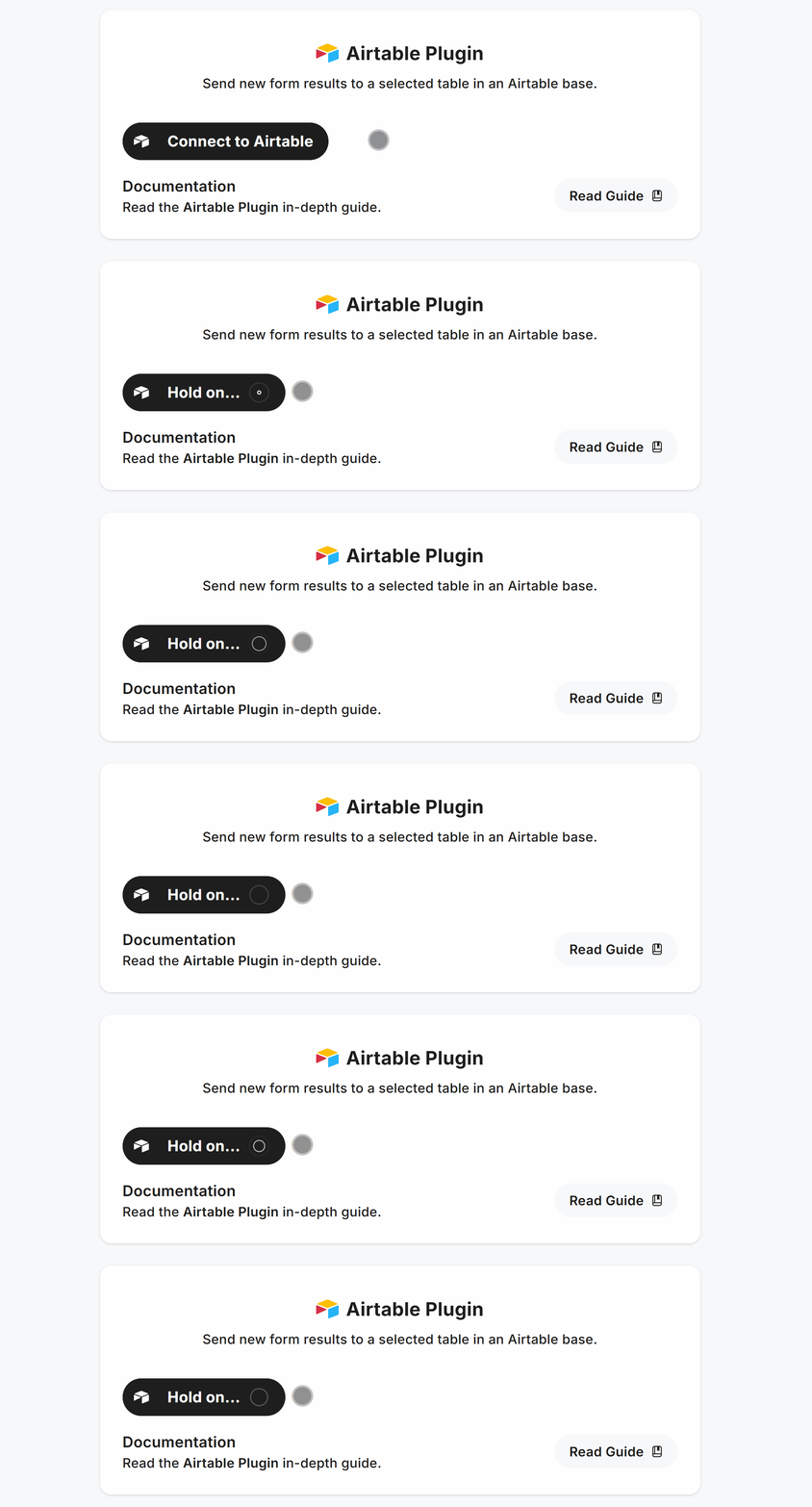
This opens an authorization window where you can sign in to Airtable and choose which Airtable Base(s) to grant access to:

Once Airtable is authorized, you’ll see each Base you’ve granted access to.
Select the Base and Table where you want to create new rows from your form results, then click Save:
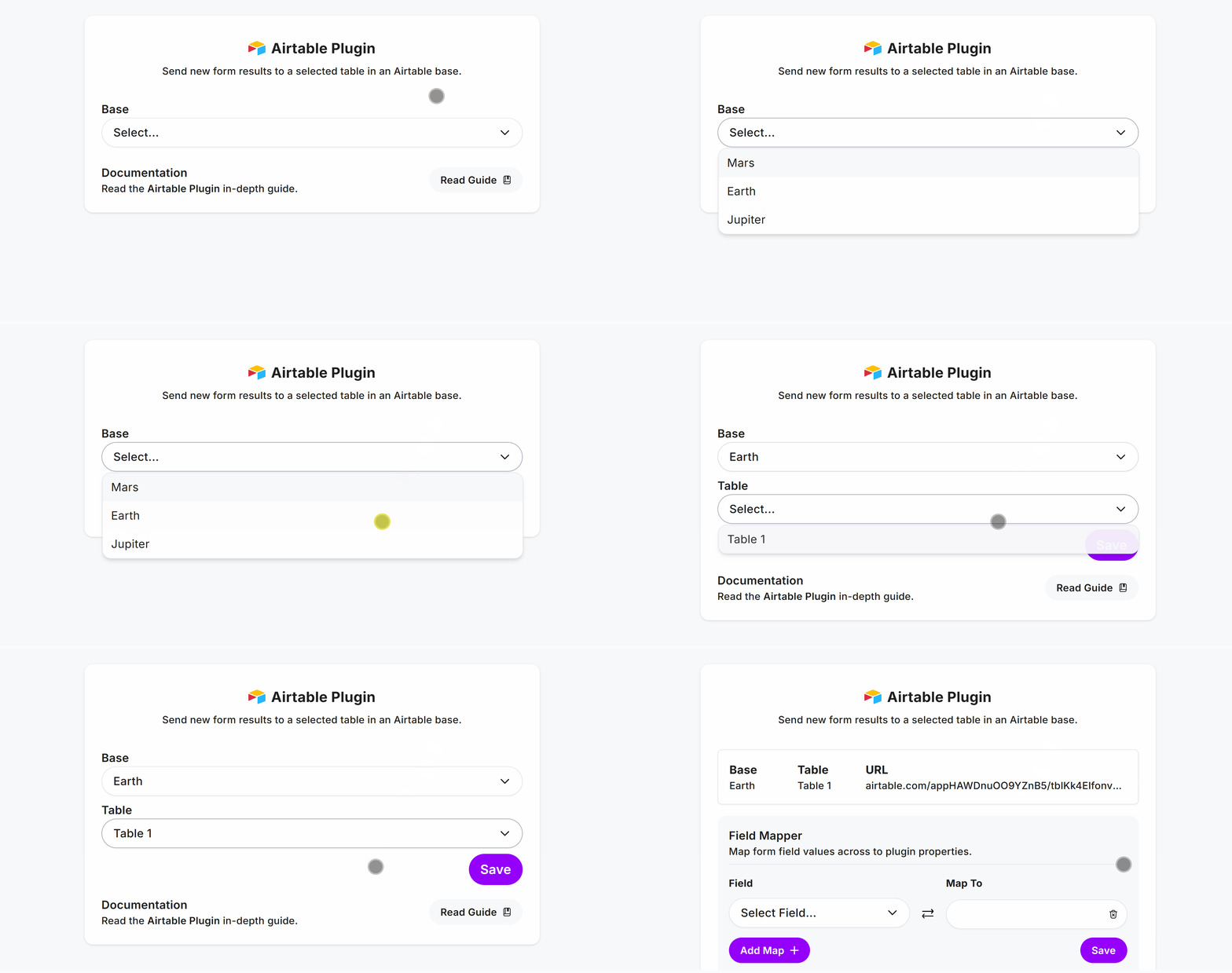
Once connected, you’ll see a direct link to your selected Airtable Base and Table.
# Connect Form Fields to Airtable
Use the Field Mapper to connect your form fields to columns in Airtable.
For example, start with a form containing a Name field:

In Airtable, create a column such as Full Name:
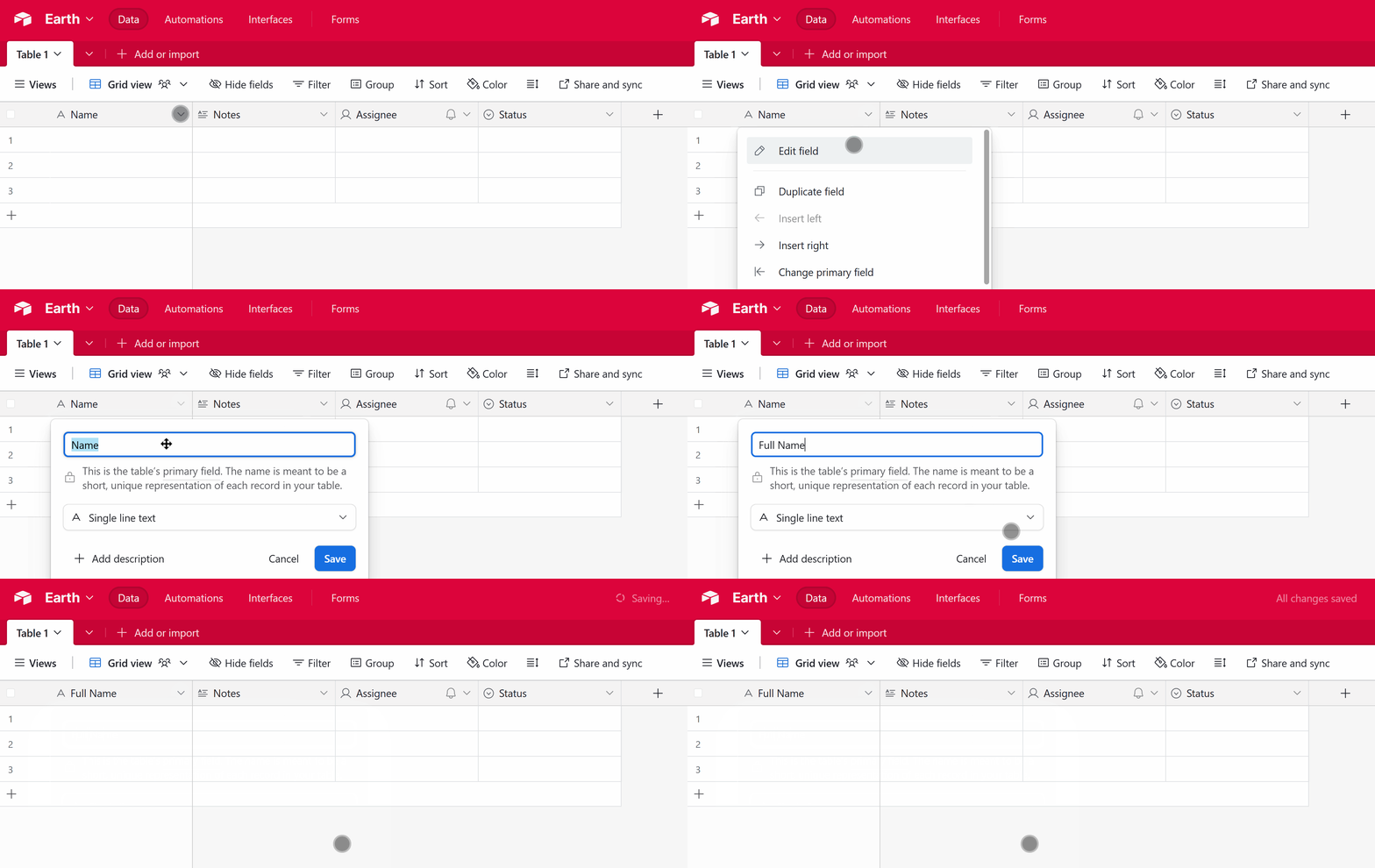
Then use the Field Mapper in the Airtable Plugin to map the Name form field to the Full Name Airtable column:

Click Save and Publish, then enter some data in your form and click Send:

The submitted data will then appear in the mapped Airtable column:

That’s all you need to connect a form field to an Airtable column. The sections below cover the Airtable field types supported by the plugin.
# Supported Fields
The Airtable Plugin supports the following Airtable field types and their corresponding form fields.
# Single line text
Choose the Single line text field type in Airtable to sync short text values:

Then enter some data in the linked field and submit the form:
 Field type ‘Short Answer’ • Field Mapped to ‘Restaurant Name’
The submitted value will then appear in Airtable:

# Long text
Choose the Long text field type in Airtable to sync longer text, such as descriptions or paragraphs:

Then enter some data in the linked field and submit the form:
 Field type ‘Long Answer’ • Field Mapped to ‘Restaurant Description’
The submitted value will then appear in Airtable:

# Date
Choose the Date field type in Airtable to sync calendar dates:

Then enter a date in the linked field and submit the form:
 Field type ‘Date’ • Field Mapped to ‘Restaurant Opening Date’
The submitted date will then appear in Airtable:

# Phone number
Choose the Phone number field type in Airtable to sync telephone numbers:

Then enter a telephone number in the linked field and submit the form:
 Field type ‘Telephone’ • Field Mapped to ‘Restaurant Telephone’
The submitted number will then appear in Airtable:

Choose the Email field type in Airtable to sync email addresses:

Then enter an email address in the linked field and submit the form:
 Field type ‘Email’ • Field Mapped to ‘Restaurant Email’
The submitted email address will then appear in Airtable:

# URL
Choose the URL field type in Airtable to sync website addresses and other URLs:

Then enter a URL in the linked field and submit the form:
 Field type ‘URL’ • Field Mapped to ‘Restaurant Website’
The submitted URL will then appear in Airtable:

# Number
Choose the Number field type in Airtable to sync numbers, including decimal values:

Use the Number Field in your form, enter a value, and submit the form:
 Field type ‘Number’ • Field Mapped to ‘Restaurant Employee Count’
The submitted value will then appear in Airtable:

# Currency
Choose the Currency field type in Airtable to sync monetary values, including decimal values:
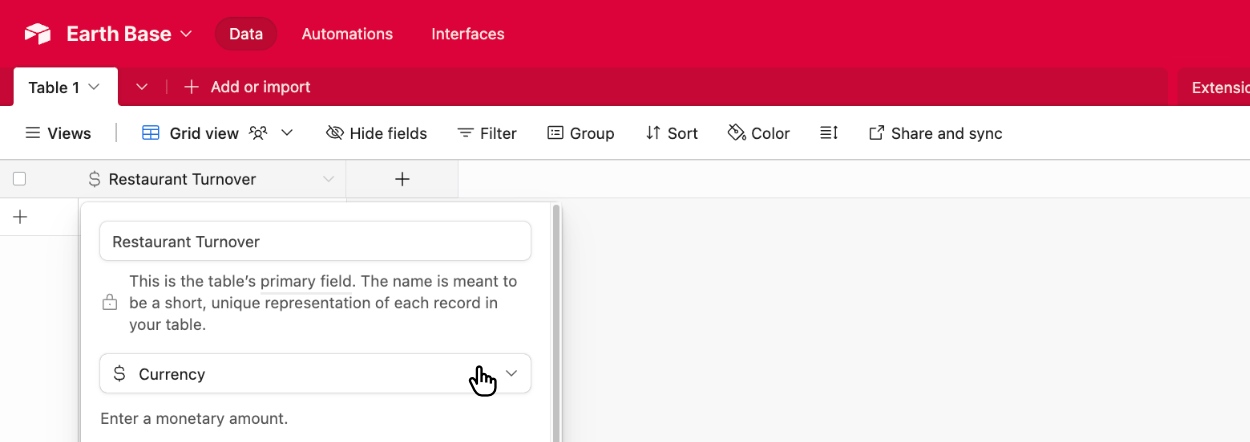
Use the Number Field in your form, enter a value, and submit the form:
 Field type ‘Number’ • Field Mapped to ‘Restaurant Turnover’
The submitted value will then appear in Airtable:

# Attachment
Choose the Attachment field type in Airtable to sync the Upload Field or Signature Field as an Airtable attachment. Both images and documents are supported.
Single or multiple files can be synced to Airtable from each result. For this example, we’ll use the Signature Field, but the process is the same for uploaded files.

Enter a signature in the linked field and submit the form:
 Field type ‘Attachment’ • Field Mapped to ‘Signature’
The submitted signature will then appear in Airtable:

# Single select
Choose the Single select field type in Airtable to sync a single predefined value from our Single-Select Field or Dropdown Field.

Add the possible options to the Airtable field:

Then create the same options, including matching capitalization, in your Fun Forms field:

Select an option in the linked field and submit the form:
 Field type ‘Single-Select’ • Field Mapped to ‘Days Open’
The selected value will then appear in Airtable:

Because the Airtable field contains predefined options, you can also change the value directly in Airtable if needed:

# Multiple select
Choose the Multiple select field type in Airtable to sync one or more predefined values from our Multi-Select Field.

Add the possible options to the Airtable field:

Then create the same options, including matching capitalization, in your Fun Forms field:

Select one or more options in the linked field and submit the form:
 Field type ‘Multiple-Select’ • Field Mapped to ‘Accepts Payment’
The selected values will then appear in Airtable:

You can also change the selected values directly in Airtable if needed:

# Checkbox
Choose the Checkbox field type in Airtable to sync a checked or unchecked status. The Yes/No Field and Multi-Select Field can both be used with an Airtable checkbox, with the Multi-Select Field limited to a single option.

The recommended option is the Yes/No Field. Respondents can select Yes or No, which maps to a checked or unchecked Airtable checkbox:
 Field type ‘Yes/No’ • Field Mapped to ‘Registered Business’
Important: The Yes value must remain unchanged for this mapping to work. Don’t rename the Yes label in the field.
The submitted value will then appear in Airtable:

You can also use the Multi-Select Field if you only include one option:

Explainer: The Multi-Select Field must contain exactly one option when used with an Airtable checkbox. The selected option is treated as the Yes value. If the field contains two or more options, the Airtable Plugin ignores it.
The submitted value will then appear in Airtable:

# Percentage
Choose the Percentage field type in Airtable to sync a number as a percentage:

Use the Number Field to let respondents enter their percentage in either whole-number or decimal format.
🏆 Pro Tip: The Airtable Plugin supports both whole numbers and decimal values. For example, respondents can enter
48for48%or0.38for38%.
Option 1: Whole Number
Enter 48 for 48%:
 Field type ‘Number’ • Field Mapped to ‘Profit Margin’
The value will then appear in Airtable:

Option 2: Decimal Number
Enter 0.38 for 38%:
 Field type ‘Number’ • Field Mapped to ‘Profit Margin’
The value will then appear in Airtable:

# Rating
Choose the Rating field type in Airtable to sync a rating:

Use the Rating Field to send ratings to Airtable.
🚨 Important: The Airtable Plugin supports 5 or 10 stars in Airtable, while the form’s Rating field supports a maximum of 5 stars. When Airtable is configured for 10 stars, the plugin doubles the form rating automatically.
Half-star ratings require Airtable’s 10-star configuration. For example, a
4.5rating from your form is sent to Airtable as9. Airtable’s 5-star rating field doesn’t support half-star values.
If your Airtable Rating field is set to 5 stars, disable half-star ratings in your form field. Click Edit on the Rating field and select Yes for Disable half stars?:

You can then select a rating in the linked field and submit the form:
 Field type ‘Rating’ • Field Mapped to ‘Restaurant Rating’
The submitted rating will then appear in Airtable:

If you’d like to use half-star ratings, configure the Airtable Rating field to use 10 stars:

Then enable half-star ratings in the form field by clicking Edit and selecting No for Disable half stars?:

Select a half-star rating in the linked field and submit the form:
 Field type ‘Rating’ • Field Mapped to ‘Restaurant Rating’
The 4.5 rating will be doubled to 9 in Airtable, providing half-star support with the 10-star Airtable configuration:

That’s it! If you need any help, contact us anytime.
Beautiful forms for serious business
From quick enquiries to complex onboarding — signatures, PDFs, conditional logic, unlimited forms and results.
Make Free Forms

 No credit card
-
Unlimited forms
-
Unlimited results