Create & Publish
 35+ Form Fields
Build the perfect form in a few clicks and drags.
 Conditional Logic
Build forms that adapt to each user's answers.
 E-Signatures
Collect digital signatures directly in your forms.
 Share Form Links
Each form you create generates a unique URL for easy sharing.
 Embed Your Form
Embed your form anywhere that supports HTML.
 Live Preview
Preview and test your form as you build it, without affecting your live form.
 Offline Recovery
Automatically restore form data after connection loss or page refresh.
Branding & Personalization
 70+ Theme Library
Start with a beautiful theme, then make it completely your own.
 Custom Themes
Fully customize your form's design and reuse it across all your forms.
 Cover Photo
Add a custom cover photo or color to the top of your form.
 Logo Branding
Add your own logo to your forms, emails and PDF results.
 Custom Social Share
Customise how your form appears when its link is shared.
 Custom Redirect
Redirect to your own thank you URL after form submission.
 Custom Favicon
Add your own favicon to your form's browser tab.
Sending & Configuration
 Custom Domains
NEW
Send autoresponders from your own domain.
 PDF Results
Automatically generate branded PDFs from your form results.
 Autoresponders
NEW
Send automatic replies to form respondents.
Results & Management
 Results Dashboard
View, manage and export every form result from one place.
 Project Folders
Organize your forms into projects for easier management.
 Project Members
Invite other users to your projects and build forms together.
Unlimited everything.
Build unlimited forms, collect unlimited results, and use unlimited templates — all for free.

By industry
 Legal Services
One home for every legal services form — conveyancing, family law, immigration and more, ready to customize.
 Real Estate
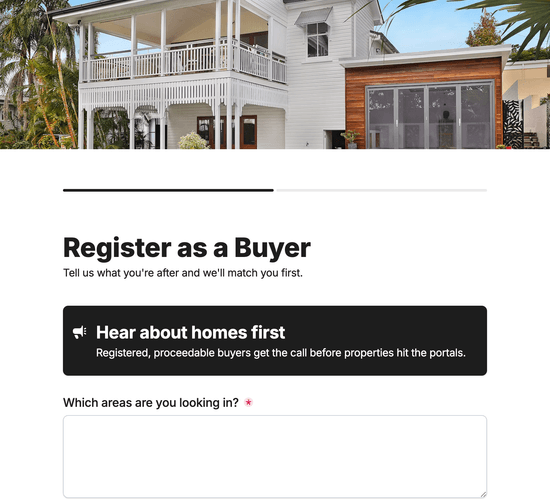
One home for every real estate form — commercial property, estate agents, lettings & property management and more, ready to customize.
 Healthcare
One home for every healthcare form — care homes, dental practices, gp & medical practices and more, ready to customize.
 Fitness
One home for every fitness form — calisthenics, climbing, crossfit and more, ready to customize.
 Beauty
One home for every beauty form — barbering, hair salon, lashes & brows and more, ready to customize.
 Construction
One home for every construction form — bricklaying & masonry, carpentry & joinery, demolition and more, ready to customize.
 Hospitality
One home for every hospitality form — holiday rentals, hotels & b&bs, resorts & holiday parks and more, ready to customize.
By type
Contact Forms Make it easy to reach you — customizable contact forms for any site. Booking Forms Take bookings 24/7 — customizable forms your customers can submit anytime. Registration Forms Register people fast — events, courses and programs, ready to customize. Application Forms Collect applications of any kind — jobs, memberships, programs and more. Feedback Forms Hear what people think — customizable feedback forms for any audience. Lead Forms Fill the pipeline — lead-capture forms you can embed anywhere. Survey Forms Ask the right questions — customizable surveys for any audience.Popular
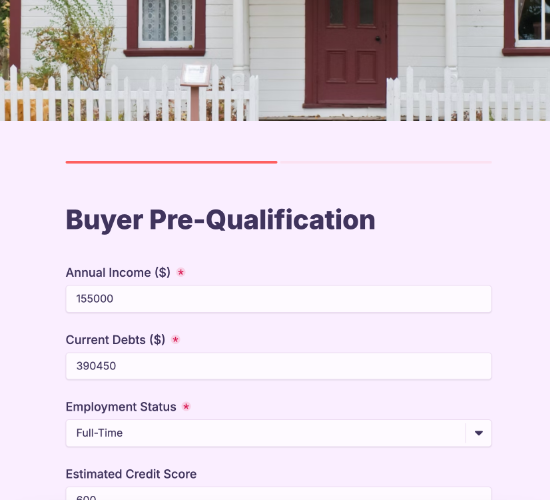
Contact Form Route customer inquiries cleanly — reason, urgency and account — so messages reach the right team and get the right response. Lead Capture Form Turn social media interest into leads — service, needs and contact details — captured the moment someone’s curious. Event Registration Form Register attendees for your non-profit events online, capturing contact details, dietary needs, and volunteer interest in one friendly form. Appointment Request Form Let patients request an appointment online — preferred date, time, type and reason — so your front desk can book it fast. Job Application Form Take job applications with one clean form — contact, role, resume, availability and eligibility — ready to shortlist. Customer Feedback Form Gather customer feedback on their store visit — satisfaction, what worked and any issues — so you keep shoppers coming back. Membership Signup Form Sign up new members to your community group online, capturing contact details, membership type, and consent in one tidy form.Start from a template.
Every one is free, fully customizable and ready to embed — make it yours in minutes.







Missing an app?
Pipe submissions to 6,000+ apps with Zapier, or hit any endpoint using webhooks.
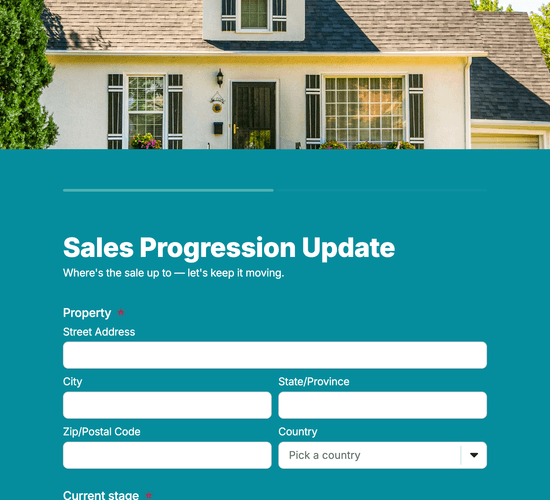
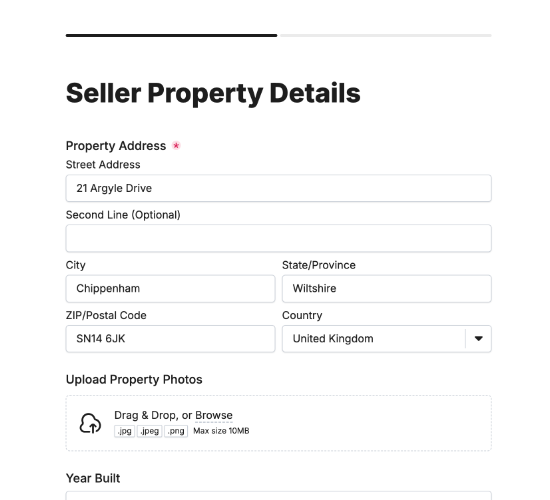
Sale Chain Details Form
A chain-tracking template for estate agents — each link, its status and solicitors captured, so a sales chain is mapped and progressed without nasty surprises.
Description
Form fields
Everything the Sale Chain Details Form above collects — 8 fields across 2 pages, so you can see exactly what it captures before you make it your own.
Your Chain Details
Your position in the chain
Single-Select

Chain links (party, property, status) (party, property, status)
Table
Your solicitor / conveyancer
Short Answer
Other agents involved (if known)
Short AnswerAnything you know about delays?
Long Answer
Your details
Your name
Name
Contact number
Telephone
Email address

 No credit card
-
Unlimited forms
-
Unlimited results
Template FAQs
Common questions about the Sale Chain Details Form — what it captures, when to use it, and how to make it your own.
What is a property chain?
It’s the sequence of linked purchases where each buyer needs their sale to complete to fund their next one — from a first-time buyer at the bottom to someone with nothing to buy at the top. A chain completes together, so one delay holds up everyone.
What should a chain details form capture?
Your position in the chain, the properties and parties above and below, each link’s status, and the solicitors involved. This form captures all of it so the agent can map the chain and spot where it’s stalling before it becomes a problem.
Why do chains cause delays?
Because every link depends on the others — a slow solicitor, a mortgage hold-up or a survey issue anywhere ripples through the whole chain, since all the sales usually exchange and complete together. Mapping the chain lets the agent chase the actual blockage, not guess.
How does an agent progress a chain?
By tracking each link’s status, staying in regular contact with the other agents and solicitors, and chasing whatever’s holding things up. Good sales progression keeps everyone moving toward a coordinated exchange. This form gives the agent the full map to work from.
Who are the solicitors in a chain?
Each buyer and seller has a conveyancer handling the legal work, and they liaise along the chain to agree dates and exchange together. Knowing who they all are lets the agent coordinate. The form captures the solicitors so progression calls reach the right people.
Is the chain details form free?
Yes — the form is free with a Fun Forms account, fully customizable to your agency, and it embeds on your website or shares as a link, with no coding needed.
-
No credit card
-
Unlimited forms
-
Unlimited results